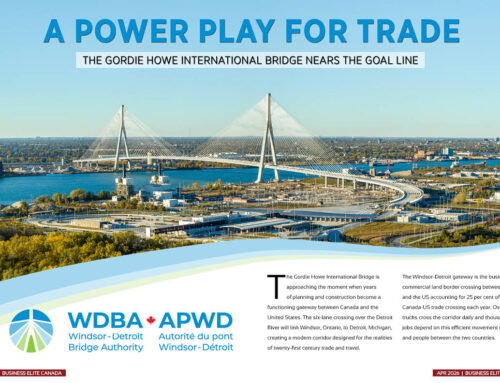
In a region where congestion has long been the cost of growth, the opening of the stal̕əw̓asəm (Riverview) Bridge signals a meaningful shift in how goods, people, and investment move across the Fraser River. Connecting New Westminster and Surrey, the highly-anticipated project replaces the nearly 90-year-old Pattullo Bridge with infrastructure built for safety, reliability, and long-term economic performance.
“The stal̕əw̓asəm Bridge is a four-lane, toll-free bridge that improves travel for drivers, cyclists and pedestrians, as well as communities on either side of the bridge,” says Wendy Itagawa, Vice President, Major Projects for Transportation Investment Corporation. “By ensuring a reliable crossing, the new bridge will support local businesses, enhance regional connectivity, help mitigate traffic delays and support economic growth in Metro Vancouver and the Fraser Valley.”
Strengthening a Vital Corridor
The crossing serves as a key link between New Westminster and Surrey—two rapidly growing communities. As one of the primary routes for goods movement and commuter traffic, the bridge plays a central role in connecting the broader Fraser Valley to other markets. “The new bridge has wider lanes that will allow traffic, particularly truck traffic, to flow more safely and efficiently,” Itagawa explains.
Upgrades extend well beyond the bridge deck itself. New direct connections to East Columbia Street and Highway 17, along with improved overpasses and multi-use paths, are reshaping how residents and businesses navigate the region. “Commuters from New Westminster and Surrey are benefiting from improved connections to the existing road networks on both sides of the bridge,” Itagawa adds.
These improvements are designed with the future in mind. The bridge has been engineered to accommodate potential expansion to six lanes, ensuring it can meet long-term transportation demands as population and trade volumes continue to grow.
A Name Rooted in Place
The name stal̕əw̓asəm carries deep cultural meaning, reflecting the project’s connection to Indigenous history and stewardship of the area.
“The Pattullo Bridge Replacement Project is in an area of great past, present, and future significance to First Nations,” says Itagawa. “First Nations stewardship priorities are guiding important activities on the project, such as cultural heritage management and fish and fish habitat offsetting.
The name itself was bestowed by the Musqueam Indian Band and Kwantlen First Nation. stal̕əw̓asəm can be understood as ‘a space where you can view the river.’ While the English translation is Riverview. using the hən̓q̓əmin̓əm̓ name is an opportunity to honour and celebrate Indigenous language and culture and support language revitalization.
Engineering at Scale
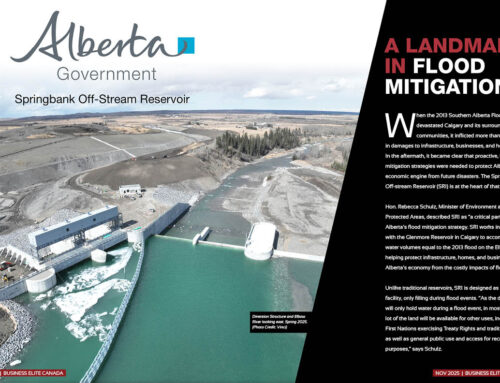
From a technical perspective, the bridge stands as one of the most significant infrastructure builds in British Columbia in recent years. More than twice the width of its predecessor, the structure is a single-tower cable-stayed bridge featuring 80 stay cables and the tallest bridge tower in the province at 167 metres. “The total length is approximately 1,235 metres from abutment to abutment,” Itagawa says. “The bridge spans 530 metres across the river.”
The design incorporates major advancements in both safety and environmental performance. By reducing the number of in-river foundations from six to two, the project improves navigation while minimizing ecological effects.
Construction utilized a balanced cantilever method, assembling the bridge segment by segment from the central tower. “This means the structure was put up segment by segment on alternating sides of the bridge tower to keep the weight balanced,” Itagawa explains.
An H-shaped tower design further enhances safety by preventing cables from crossing over traffic lanes, reducing the risk of ice or snow falling onto vehicles.
Navigating Complex Challenges
Building at one of the narrowest points along the Fraser River presented considerable challenges. High water velocities and a dynamic riverbed required extensive hydraulic analysis and physical modelling to ensure structural integrity and protect downstream conditions.
“Bridge foundation design underwent detailed hydraulic analysis to ensure the bridge doesn’t cause hydraulic effects on downstream structures and limits sedimentation forming within navigational channels,” says Itagawa.
The project also required precise coordination with nearby infrastructure, including a rail swing bridge located just 50 metres away and five active railway lines. Maintaining uninterrupted operations while advancing construction demanded close collaboration with rail operators and utility providers.
Environmental Stewardship in Action
Environmental protection is a priority throughout the project. Reducing in-river piers was one step, but a broader suite of mitigation measures was implemented to safeguard aquatic ecosystems.
“In-river construction mitigation measures include working during least-risk windows for fish, using bubble curtains to minimize underwater noise, and implementing a fish and fish habitat offsetting program in collaboration and consultation with First Nations,” Itagawa says.
Environmental stewardship efforts have been guided by First Nations knowledge, input and priorities and include the qiqéyt Foreshore Habitat Restoration Project, which will restore and enhance habitat for key species including sockeye, coho, chum, chinook, and pink salmon. Additional initiatives are being collaboratively developed with First Nations to support eulachon and sturgeon populations.
Collaboration as a Cornerstone
The delivery of the project reflects a high level of coordination among public agencies, municipalities, and private partners. The project team worked closely with the cities of New Westminster and Surrey, First Nations, and regional transportation authorities like TransLink.
“Collaboration with local governments, First Nations, regulators, and marine users has been a cornerstone of the project,” says Itagawa. “Engagement with local governments and stakeholders has been ongoing since the project development phase, and First Nations have been contributing to environmental studies, mitigation and offsetting, and design elements including landscaping and art.
Economic Impact and Workforce Development
Beyond its transportation benefits, the project has delivered significant economic value during construction. Delivered under a Community Benefits Agreement (CBA), it prioritized local hiring and created meaningful opportunities for skilled trades and apprentices.
Over the course of the project, 931 tradespeople have been employed under the CBA, most of whom are people living in British Columbia. Employees from the local area provide 85% of the worked hours, and 14% of skilled tradespeople have been Indigenous – more than double the provincial average.
The project also supported workforce development, with apprentices making up 15% of workers. In total, approximately 7,300 direct and indirect jobs are expected to result from the project.
Looking Ahead
With four lanes now open, the stal̕əw̓asəm Bridge is already transforming how people move across the Fraser River. Additional road connections and multi-use pathways are set to come into service in the coming months, further enhancing accessibility.
“It’s still early, and we continue to monitor the new bridge traffic,” Itagawa says. “We are still working on the key road and multi-use path connections, which will come into service this summer.”
For more information, please visit www.pattullobridgereplacement.ca.